The terms saunagus and aufguss are often used interchangeably, but although the two traditions are closely related, there are cultural and stylistic differences. To understand them, you need to look at their origins, their structure and the way the experience is shaped today.
What does aufguss mean?
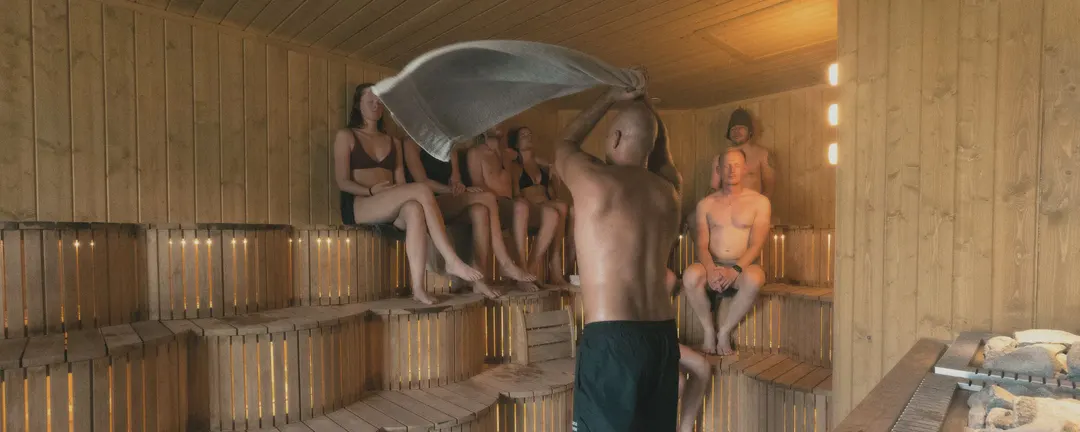
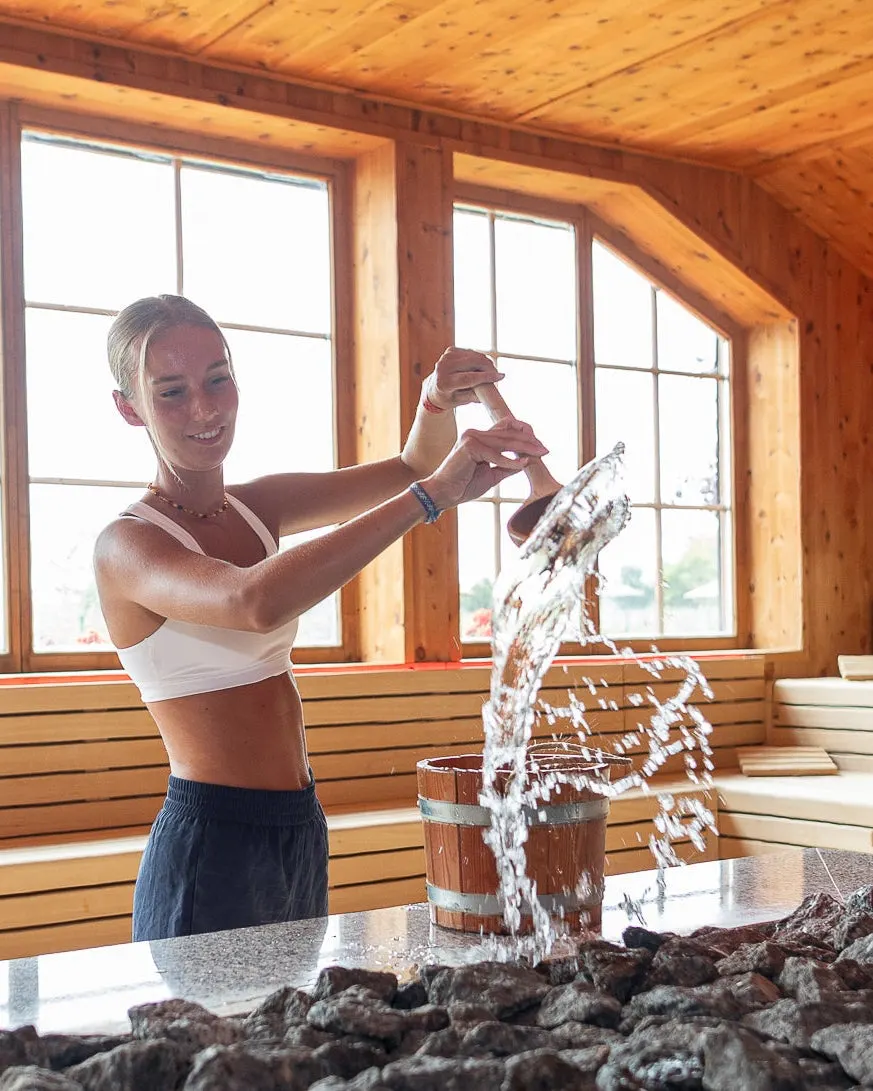
Aufguss comes from Germany and Austria and literally means “pouring on”. It refers to the moment when water – often mixed with essential oils – is poured onto the hot stones in the sauna. The steam is then spread with a towel or a fan to intensify the heat.
In Central Europe, aufguss is an established and well-defined tradition. It often follows a clear structure with several rounds, set techniques and a high degree of discipline. In many German spas, participants are expected to stay seated for the whole round, and silence is the norm.
Aufguss is very much about technique, temperature and precision.
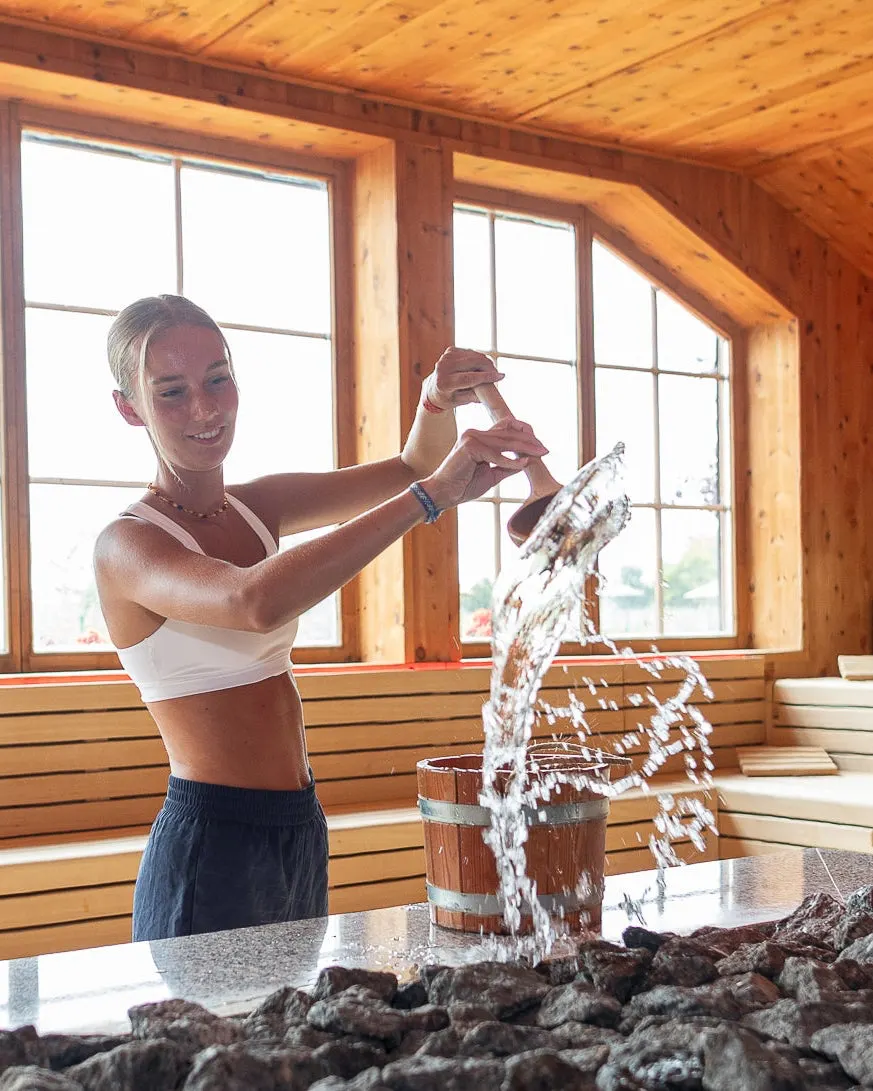
What is saunagus?
Saunagus as we know it in Denmark has its roots in the aufguss tradition but has developed in a more Nordic direction. Where aufguss is often formal and structured, Danish saunagus is typically more sensory and focused on the experience.
Saunagus can include:
-
Music
-
Themed sessions
-
Guided breathing
-
Variation in pace and mood
The structure is still built around heat, steam and rounds, but the experience can be more flexible and inclusive. Participants are welcome to leave the sauna along the way, and the atmosphere is often less formal.
You could say that saunagus is the Nordic interpretation of aufguss – still rooted in tradition, but with a greater focus on atmosphere and community.
Intensity and culture
In Germany there are official aufguss competitions, where sauna masters are judged on technique, choreography and precision. The performance element is clear, and the towel techniques can be both advanced and powerful.
Competitions have also gained ground in Denmark, but day to day, saunagus is more often about presence than performance. The intensity can be high, but the setting is more informal.
The difference therefore lies less in the technique itself and more in the culture around the experience.
Scent and heat distribution
Both traditions use essential oils, but the approach can differ. In classic aufguss the scent is often clean and clear – menthol, eucalyptus or citrus – and the focus is on intensifying the heat.
Danish saunagus often works in a more curated way with combinations of scents, atmosphere and storytelling. The scents can support a theme or a particular feeling, and they are woven into the experience as a whole.
Saunagus rooted in aufguss
At Sauna House, saunagus is built on respect for the original aufguss tradition. Several of our sauna masters are trained in aufguss and have practised the classic techniques, where structure, safety and heat distribution are central.
That gives us a solid, technically grounded foundation. At the same time, we have chosen to develop our own style, combining the tradition with Nordic calm, presence and a more sensory approach.
So when you join a saunagus session with us, you get:
-
The technical precision of the aufguss tradition
-
An experience adapted to Nordic sauna culture
-
A focus on safety and balanced heat
-
An atmosphere that feels inclusive and calm
Tradition and development
Saunagus and aufguss are not opposites. They are two expressions of the same basic idea – to deepen the sauna experience through steam, heat and guidance.
Aufguss represents the classic Central European discipline. Saunagus represents its Nordic evolution, where experience and community play a bigger role.
Combining the two traditions creates an experience that is rooted in history and suited to today.